All About Allulose
Sugar and high fructose corn syrup are the original industrial sweeteners—inexpensive, filled with empty calories, and contributing to diseases such as obesity, type 2 diabetes, cavities, and metabolic syndrome. Artificial sweeteners, like NutraSweet, Splenda, and Sweet’N Low, are the second-generation sweeteners. They are practically calorie-free, but cautions have been raised about their adverse effects. Sugar alcohols, such as sorbitol, xylitol, and erythritol, are the third-generation sweeteners. They’re low in calories but carry laxative effects or even worse. What about rare sugars like allulose?
What Is Allulose?
Allulose is a natural, so-called rare sugar, present in limited quantities in nature. “Recent technological advances, such as enzymatic engineering using genetically modified microorganisms, now allow [manufacturers] to produce otherwise rare sugars” like allulose in substantial quantities.
Allulose and Weight Loss
What happened when researchers evaluated the effect of allulose on fat mass reduction in people? As I discuss in my video Is Allulose a Healthy Sweetener?, more than a hundred individuals were randomized to a placebo control (0.012 grams of sucralose twice a day), a teaspoon (4 g) of allulose twice a day, or 1¾ teaspoons (7 g) of allulose twice a day for 12 weeks. Despite no changes in physical activity or calorie consumption in the groups, body fat significantly decreased following allulose supplementation. There weren’t any significant changes in LDL cholesterol levels in either of the allulose groups, though.
What about the purported anti-diabetes effects?
Does Allulose Help with Diabetes?
In a randomized, double-blind, placebo-controlled crossover experiment, people with borderline diabetes consumed a cup of tea containing either 1¼ teaspoons (5 g) of allulose or no allulose (control) with a meal. There was a significant reduction in blood sugar levels 30 and 60 minutes after consumption, but it was only about 15% lower compared to the control group and didn’t last beyond the first hour. To test long-term safety, the same researchers then randomized healthy people to a little over a teaspoon (5 g) of allulose three times a day with meals for 12 weeks. There didn’t appear to be any adverse side effects, but there weren’t any effects on weight or blood sugar levels either. So, it turns out the body fat data are mixed, as are the sugar data.
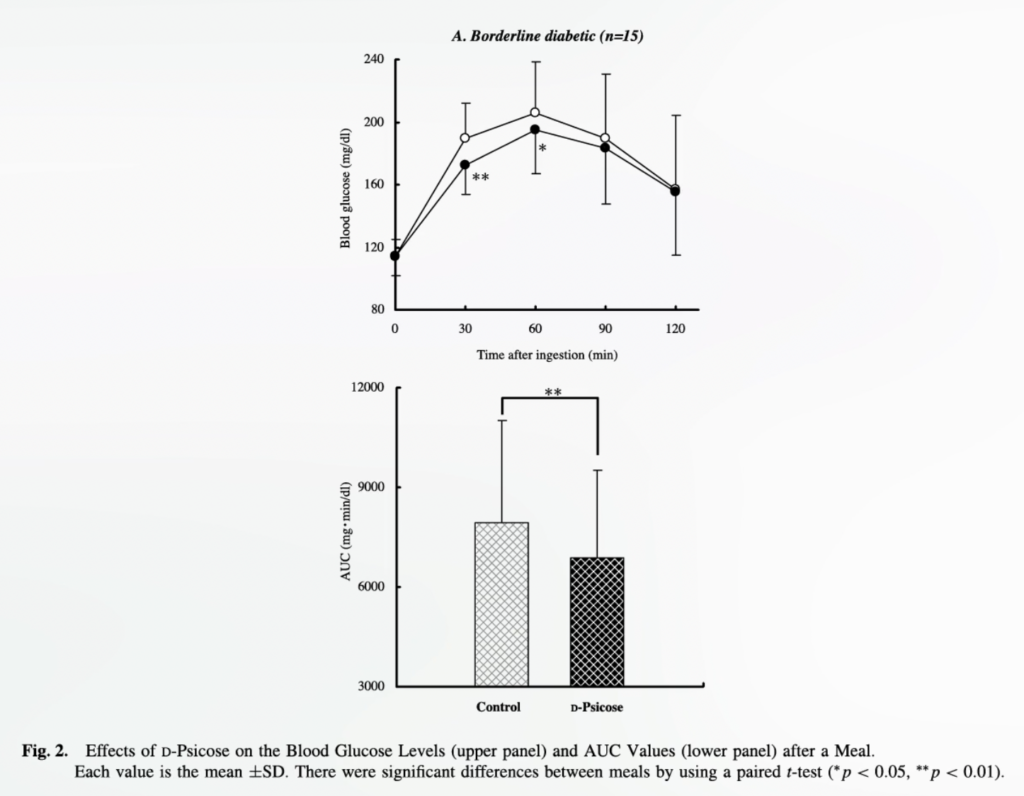
Another study found no effects of allulose on blood sugar levels in healthy participants tested up to two hours after consumption, though a similar study on individuals with diabetes did. And a systematic review and meta-analysis of all such controlled feeding trials suggested that the acute benefit on blood sugars was of “borderline significance.” It’s unclear whether this small and apparently inconsistent effect could translate into meaningful improvements in long-term blood sugar control. It may not be enough just to add allulose—you might also have to cut out junk food.
Is Allulose Good or Bad for You?
As I discuss in my video Does the Sweetener Allulose Have Side Effects?, unlike table sugar, allulose is safe for our teeth; it apparently isn’t metabolized by cavity-causing bacteria to produce acid and promote plaque buildup. It doesn’t raise blood sugar levels either, even in people with diabetes. Allulose is considered a “relatively nontoxic” sugar, but what does that mean?
How Much Allulose Is Too Much?
In one study, researchers gave healthy adults beverages containing gradually higher doses of allulose “to identify the maximum single dose for occasional ingestion.” No cases of severe gastrointestinal symptoms were noted until a dose of 0.4 g per kg of bodyweight was reached, which is about eight teaspoons for the average American. Severe symptoms of diarrhea were noted at a dose of 0.5 g per kg of bodyweight, or about ten teaspoons.
In terms of a daily upper limit given in smaller doses throughout the day, once participants reached around 17 teaspoons (1.0 g/kg bodyweight) a day, depending on weight, some experienced severe nausea, abdominal pain, headache, or diarrhea. So, most adults in the United States should probably stay under single doses of about 8 teaspoons (0.4 g per kg of bodyweight) and not exceed about 18 teaspoons (0.9 g per kg of bodyweight) for the whole day.
So, What’s the Verdict on Allulose?
Are rare sugars like allulose a healthy alternative for traditional sweeteners? Well, considering the variety of potentially beneficial effects of allulose “without known disadvantages from metabolic and toxicological studies, allulose may currently be the most promising rare sugar.” But how much is that saying? We just don’t have a lot of good human data. “As a result of the absence of these studies, it may be too early to recommend rare sugars for human consumption.” This is especially true given the erythritol debacle.
from NutritionFacts.org https://nutritionfacts.org/blog/all-about-allulose/
via IFTTT


Comments
Post a Comment